

Obby World: Squid Escape
Obby: Boxer
Cubic Frontier: Zombie Robby
PlayBlox.io

Find The Pets
Doors Castle

Tung Tung Sahur: Obby Challenge

Obby Parkour Race: Multiplayer

Fortzone Battle Royale

Race Clicker: Tap Tap Game

Bank Heist

Vehicle Masters

Crazy Plane Landing

House of Celestina
Sharkosaurus Rampage
Obby: Pull a Sword

Cricket Superstar League

Sunset Bike Racing

Fisherman Life
Shape Shooter 3
Money Factory

Mini-Caps: Arena

Chibi Doll Dress Up & Coloring
Stickman Project

Fly for Fly

Endurance: A Top-Down Sci-Fi Shooter

Anna's Story: Dress Up DIY

Burger Boss

Obby Sprunki: Pet World

Craft and Battle

Rodha
Money Tree 2: Cash Grow Game

Evil Neighbor
Survivor: Space Battle

Miner's Odyssey
Castle Keeper
Sniper Attack 3D: Shooting War

Merge Mine: Idle Clicker

Obby Challenge: Prison Run

Scavenger Hunt - Multiplayer

Mad Evolution: Idle Merge

RealDrive

Popcorn Chef 2

Plant Squad
Find Differences: Spot 'Em All

Button Defense Clicker

Digital Circus: Obby
Knight of Chess

Lunar Knight

Hill Racing

Escape the Dog

Tile Dreams

Fly Me Hard

Scoring Champion
My Sweet World

Drift Arena
Isometric Escape 2

Sniper Master

Loot Challenge

Boom Cell

Don't Get the Job

Eternal Siege

Momlife Simulator

Diver Hero
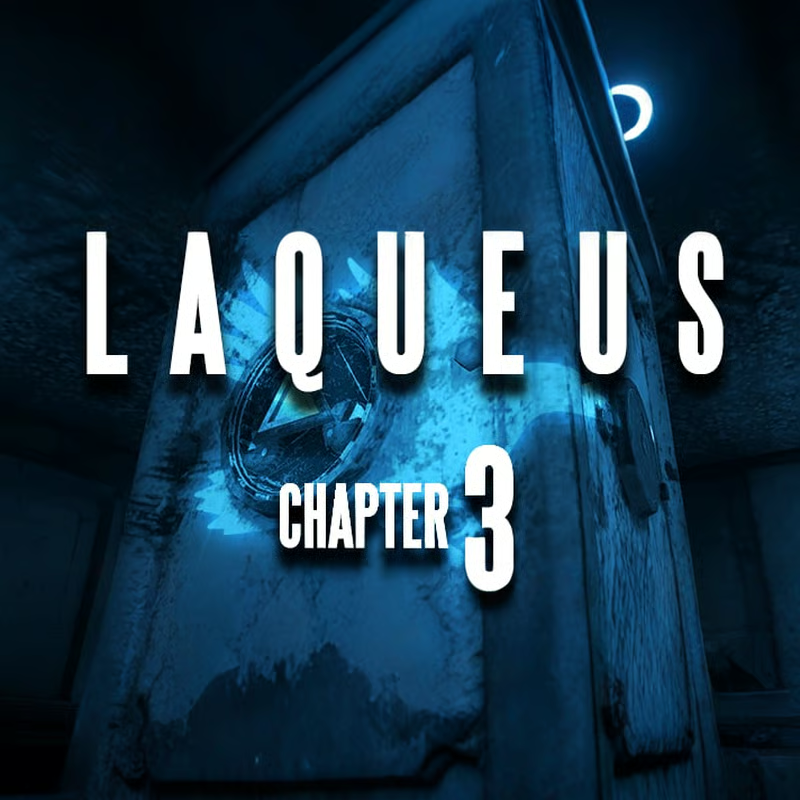
Laqueus Escape: Chapter III
Laqueus Escape: Chapter III — The Mind-Bending Room Escape Challenge You Can’t Put Down
Laqueus Escape: Chapter III continues the suspenseful Laqueus Escape series with a darker atmosphere, sharper puzzles, and a stronger sense of mystery that keeps you thinking long after you close the browser tab. This is the kind of online escape room game that rewards careful observation, logical reasoning, and patience. Every locked drawer, strange symbol, and seemingly useless object may hide the clue you need to move forward. If you enjoy point-and-click puzzle games, detective-style riddles, and immersive mystery adventures, this chapter delivers a satisfying blend of tension and “aha!” moments.
Gameplay: How Laqueus Escape: Chapter III Works
At its core, Laqueus Escape: Chapter III is a classic room escape puzzle game with modern pacing. You explore a confined environment, interact with objects, collect items, and solve layered puzzles to unlock new areas and ultimately escape. The gameplay loop is simple to learn but hard to master:
-
Explore the room in detail: Click or tap around to inspect furniture, walls, boxes, and unusual markings.
-
Collect items and combine clues: Keys, notes, tools, and fragments often connect across multiple puzzles.
-
Solve codes and mechanisms: Expect number locks, symbol sequences, hidden switches, pattern puzzles, and multi-step logic chains.
-
Progress through narrative tension: Each solved puzzle reveals more about the setting and raises new questions, creating a strong mystery vibe.
Unlike many casual puzzle titles that feel random, Laqueus Escape: Chapter III leans into consistent logic and environmental storytelling. It’s not about speed; it’s about reading the room like a detective, tracking what you’ve learned, and using your head to keep moving.
Tips and Tricks: Beat Tough Puzzles Without Spoiling the Fun
If you’re stuck, you’re not alone—this chapter is designed to be challenging. These strategies help you progress while still preserving the satisfaction of solving it yourself.
1) Treat Everything as a Potential Clue
In a mystery escape game, the smallest detail can matter: scratches on a surface, a repeated color pattern, an odd object placement, or a symbol that appears twice. If something looks decorative, double-check it. Many players get stuck because they assume a clue is just scenery.
2) Build a Mental Map of “Locked” vs “Solved”
When you find a locked box, keypad, or mechanism, note what kind it is: numbers, shapes, arrows, colors, or letters. Later, when you discover a sequence on a note or wall, you’ll immediately know where it belongs. This is especially useful in Chapter III where puzzles often interconnect.
3) Re-Inspect Old Areas After Every Major Unlock
Laqueus Escape: Chapter III frequently rewards backtracking. After you open a new compartment or obtain a tool, revisit earlier objects. A key might fit an old drawer. A tool might reveal hidden writing. A new clue might change how you interpret a pattern you’ve already seen.
4) Look for Consistent Puzzle Languages
Escape room puzzle design typically uses “languages” such as color order, directional arrows, symmetry, or symbol substitution. Once you identify the game’s logic for one puzzle type, apply it to others. If the game introduces a symbol set, it’s rarely used only once.
5) Slow Down and Read Carefully
Many difficult escape puzzles are solved not by trying harder, but by reading more carefully. If you find text, a diagram, or a sequence, don’t skim it. In browser puzzle games, one missed character can cost you twenty minutes.
6) Avoid Random Input
Brute forcing codes ruins the detective feeling and usually doesn’t work well anyway. Instead, confirm your evidence: Where did the clue come from? Does it match the lock type? Is there a missing piece? The game is fair when you approach it with logic.
User Intent Coverage: Why People Search for This Game
Players look for Laqueus Escape: Chapter III for different reasons, and it fits multiple puzzle-gaming moods:
-
“I want a challenging escape room game online”: This chapter is tougher than typical casual room escape titles, with layered clues and satisfying progression.
-
“I like mystery puzzle games with atmosphere”: The tone is tense and immersive, with environmental storytelling that pulls you forward.
-
“I need a point-and-click puzzle game I can play in my browser”: The experience is built around quick interaction, exploration, and logical problem solving.
-
“I’m stuck and need guidance”: Smart strategies (not direct spoilers) can help you see the room differently and find the next step.
-
“I love escape game series and want the next chapter”: Chapter III continues the familiar style while increasing difficulty and depth.
Whether you want a short brain workout or a longer session of puzzle-solving, this room escape adventure is designed to keep your mind active and your curiosity engaged.
FAQ
Q1: What kind of game is Laqueus Escape: Chapter III?
It’s a browser-based room escape puzzle game where you explore, collect items, decode clues, and unlock mechanisms to escape.
Q2: Is Chapter III hard?
Yes, it’s intentionally challenging. Puzzles often connect across multiple steps, and careful observation is essential.
Q3: Do I need to play earlier chapters first?
You can enjoy Chapter III as a standalone escape game, but players familiar with the series may appreciate the tone and puzzle style more.
Q4: What should I do if I’m stuck?
Re-check previously visited areas, review any symbols or notes you found, and match clue types to lock types. Avoid random guessing.
Q5: Is this game good for fans of escape rooms and logic puzzles?
Absolutely. It’s built for players who enjoy deduction, pattern recognition, and immersive mystery challenges.
🎮How to Play
Controls
Click and drag mouse to look around, click to examine places of interests. To use an item click to select it in the inventory, then click the place where you want to use it. Double click inventory items to zoom.