
Obby Sprunki: Pet World
PlayBlox.io

Digital Circus: Obby
Obby: Pull a Sword

Obby: Ragdoll Boxing

Obby Parkour Race: Multiplayer
Cubic Frontier: Zombie Robby

Obby World: Squid Escape

Fortzone Battle Royale
Race Clicker: Tap Tap Game
Bank Heist
Vehicle Masters

Crazy Plane Landing
House of Celestina
Sharkosaurus Rampage

Cricket Superstar League

Sunset Bike Racing

Fisherman Life
Shape Shooter 3
Money Factory

Mini-Caps: Arena

Chibi Doll Dress Up & Coloring
Stickman Project
Doors Castle
Mix Rave
Obby Challenge: Prison Run

Noob: Zombie Prison Escape
Alcatraz Prison Escape Plan
Merge Pickaxe 2
Crown & Cannon

Sky Car Drift

Epic Mine
My Sweet World
Obby: Boxer

Sneaker Art

Idle Sea Park

Boom Cell

Evil Neighbor
Ludoteca

Hill Racing
RPG Idle Clicker

Eternal Siege

Find The Pets
Button Defense Clicker

Space Rescue

Survivor: Space Battle
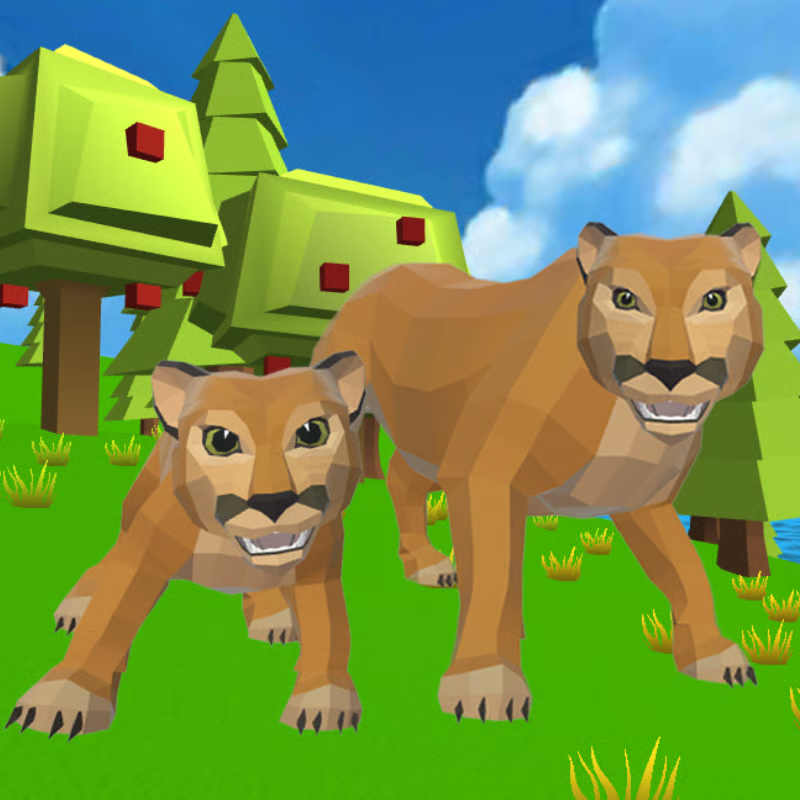
Cougar Simulator: Big Cats
Roglide: Slide & Match Blocks
Anna's Story: Dress Up DIY
Ad Fundum
Mad Royale Tactics

Tung Tung Sahur: Obby Challenge

Craft and Battle

mySolar: Build Your Planets
Megabattle
Project Prismatic

Lunar Knight

RealDrive

Rodha
Looping Monsters
Escape the Dog

Country Hopper

Endurance: A Top-Down Sci-Fi Shooter

Drift Arena
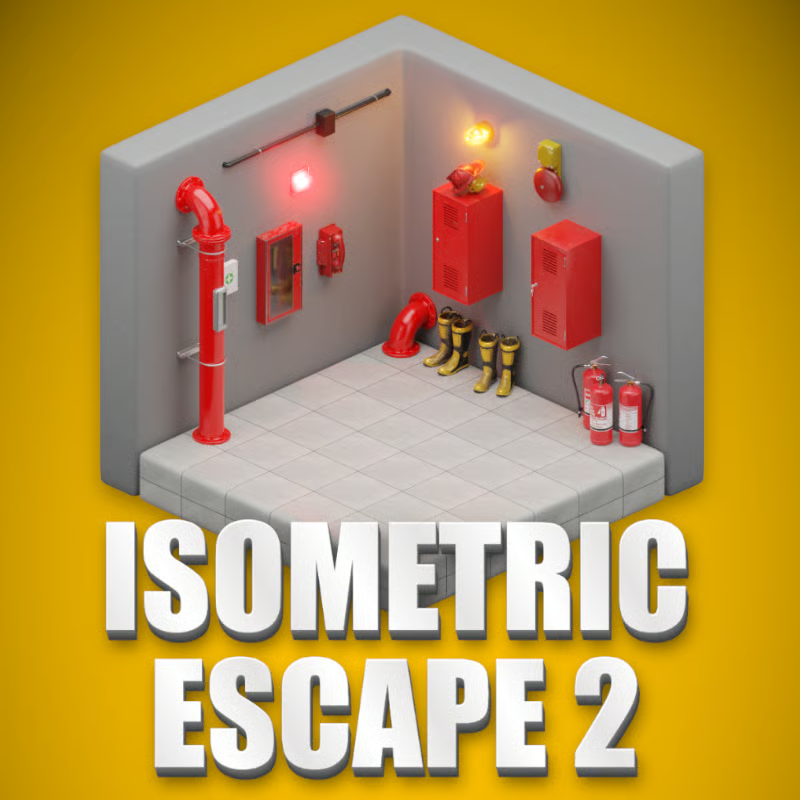
Isometric Escape 2
Isometric Escape 2 – A Mind-Bending Isometric Escape Room Puzzle Adventure
Isometric Escape 2 is the kind of room escape game that rewards patience, sharp observation, and a stubborn love for logic puzzles. Set inside beautifully angled isometric rooms, it turns every scene into a compact maze of clues, hidden objects, and clever riddles. If you enjoy point-and-click puzzle adventures, memory challenges, and brain teasers that make you feel genuinely smart when a mechanism finally clicks, this is a perfect pick.
Gameplay Overview: How the Escape Works
At its core, this is an escape room puzzle game built around exploration and deduction. You move through isometric rooms, tap or click to inspect suspicious details, and collect useful objects that may look ordinary until they become the missing piece of a larger solution. Many puzzles are layered: a lock might need a symbol sequence, but the symbols are found by combining a note, an object interaction, and a visual pattern hidden in the environment.
Expect classic escape game elements—keypads, switches, drawers, codes, and rotating mechanisms—alongside more creative logic-based tasks that demand memory and pattern recognition. The isometric perspective adds a twist: angles can conceal clues in plain sight, and “background” decorations often double as interactive hints.
Pro Tips and Strategies for Solving Faster
1) Treat every room like a puzzle board.
Scan from top to bottom and left to right. Isometric visuals can distract the eye, so build a habit: check corners, wall edges, table surfaces, and repeated motifs (shapes, colors, numbers, icons).
2) Create a mental “clue inventory.”
Even when the game doesn’t give you a journal, you can make one. Keep track of every number you see, every symbol pairing, and any unusual color order. Many escape room riddles reuse information later, especially when rooms connect.
3) Don’t force a code—verify the logic first.
If you’re trying random combinations, you’re probably missing a rule. Look for constraints: a note that says “largest to smallest,” a pattern that implies direction, or an object that hints at the correct sequence.
4) Combine items with intent.
Escape games love multi-step object use. If you have a tool, ask: what could it open, cut, measure, or activate? If an object feels incomplete (a handle, a gear, a lens), it likely belongs to a mechanism.
5) Read the room design as a hint.
Isometric puzzle games often communicate through symmetry and repetition. Three identical statues might imply a three-step input. Four colored panels often map to four buttons. If something is highlighted visually—brighter, centered, oddly clean—it’s probably meaningful.
6) Use memory tricks for symbol puzzles.
When symbols repeat across rooms, assign them simple names (Moon, Ladder, Arrow, Spiral). Then your brain remembers the sequence faster than trying to recall abstract shapes.
What Makes the Isometric Style So Addictive
Unlike flat escape room layouts, isometric rooms feel like miniature dioramas—part toy box, part labyrinth. That extra depth creates more opportunities for hidden object discovery and visual misdirection, which makes each solved riddle feel earned. It also encourages a different kind of exploration: you’re not only searching, you’re interpreting perspective, noticing alignments, and spotting patterns in architecture.
FAQ: Quick Answers for Common Player Questions
Q1: I’m stuck—what should I do first?
Re-scan the current room and re-check any objects you picked up. Most “stuck” moments happen because a small clue was seen but not interpreted, or an item needs to be used on a specific hotspot.
Q2: Are the puzzles random or fixed?
Most escape puzzle adventures rely on fixed logic so solutions feel fair and repeatable. If a code exists, it’s typically deducible from clues in the environment rather than pure guessing.
Q3: How do I find hidden objects more consistently?
Look for contrast: mismatched colors, objects that don’t fit the room theme, repeated icons, and anything with markings. Also click/tap “ordinary” furniture—drawers, shelves, frames, lamps—because many clues hide in interactive props.
Q4: Do I need advanced puzzle skills to enjoy it?
No—what you need is curiosity. The best escape room games teach you their language over time: patterns, sequences, and object logic become easier the more you play.
Q5: Any tips for code locks and symbol panels?
Always locate the “source clue” first. Codes usually come from a note, a pattern on a wall, object counts, or a color order. For symbol panels, find a matching set elsewhere—tiles, paintings, carvings, or repeated motifs.
Why People Search for Games Like This (And Why It Fits)
If you’re looking for an escape room game that’s more than a quick distraction, Isometric Escape 2 hits several popular needs:
-
A challenging puzzle game that tests logic and observation without relying on speed.
-
A relaxing brain teaser you can play in short sessions, perfect for breaks.
-
A hidden object + riddle experience where exploration matters as much as solving.
-
A puzzle adventure with unique visuals that feels different from typical flat room escape titles.
-
A satisfying “aha” loop—find clue → interpret pattern → unlock mechanism → progress.
Whether you want gentle hints to move forward or you’re aiming to master every room with efficient strategies, the key is simple: slow down, pay attention, and trust the logic. The rooms are designed to be solved—not survived—so every lock has a story, and every riddle has a trail of clues leading to the exit.
🎮How to Play
Controls
Use the left mouse button to interact with an object.