Obby Yard Sale
Mega Parkour: Obby Escape Run
Obby World: Squid Escape

Obby: Ragdoll Boxing
Digital Circus: Obby
Obby Parkour Race: Multiplayer
Tung Tung Sahur: Obby Challenge
Obby Sprunki: Pet World
Fortzone Battle Royale
Race Clicker: Tap Tap Game
Bank Heist
Vehicle Masters
Crazy Plane Landing
House of Celestina
Sharkosaurus Rampage
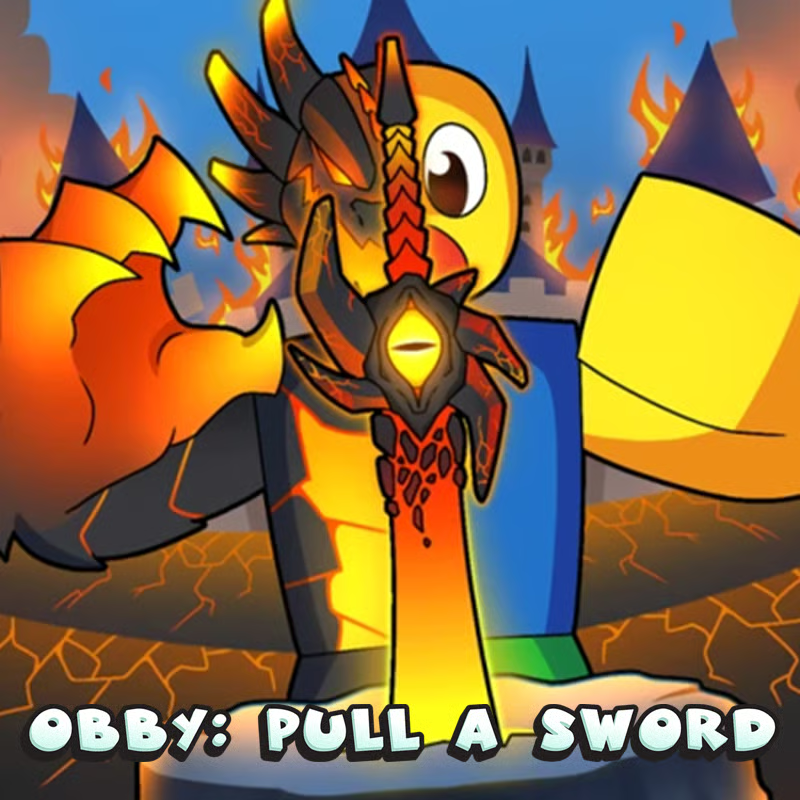
Obby: Pull a Sword
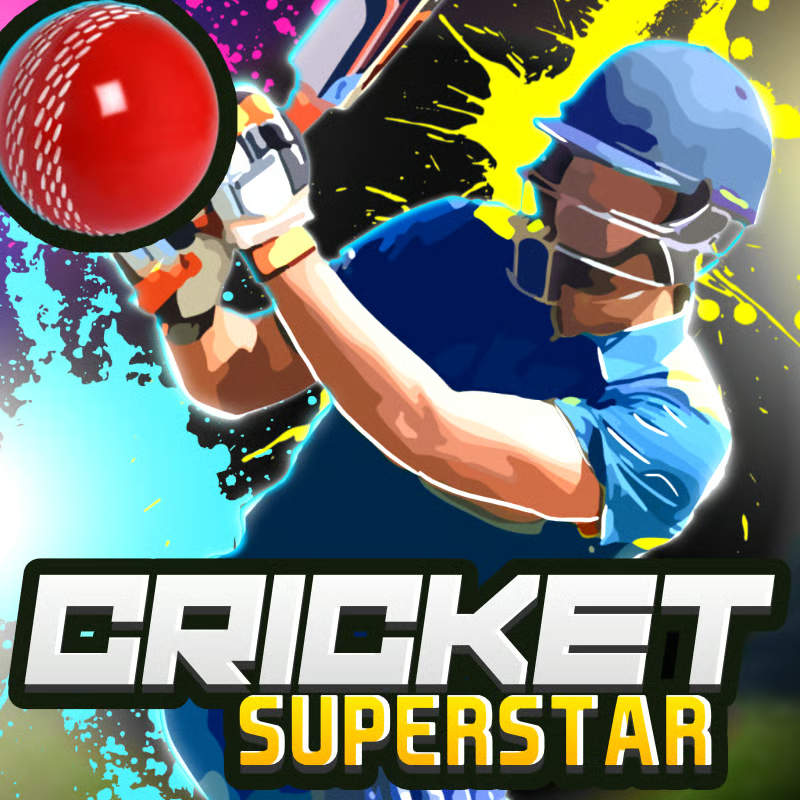
Cricket Superstar League

Sunset Bike Racing
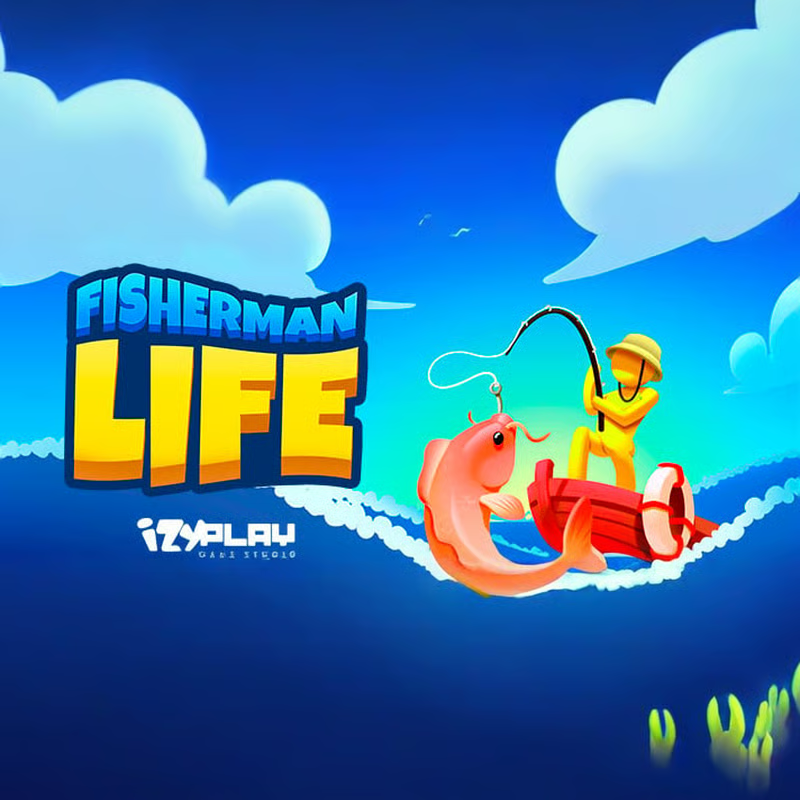
Fisherman Life
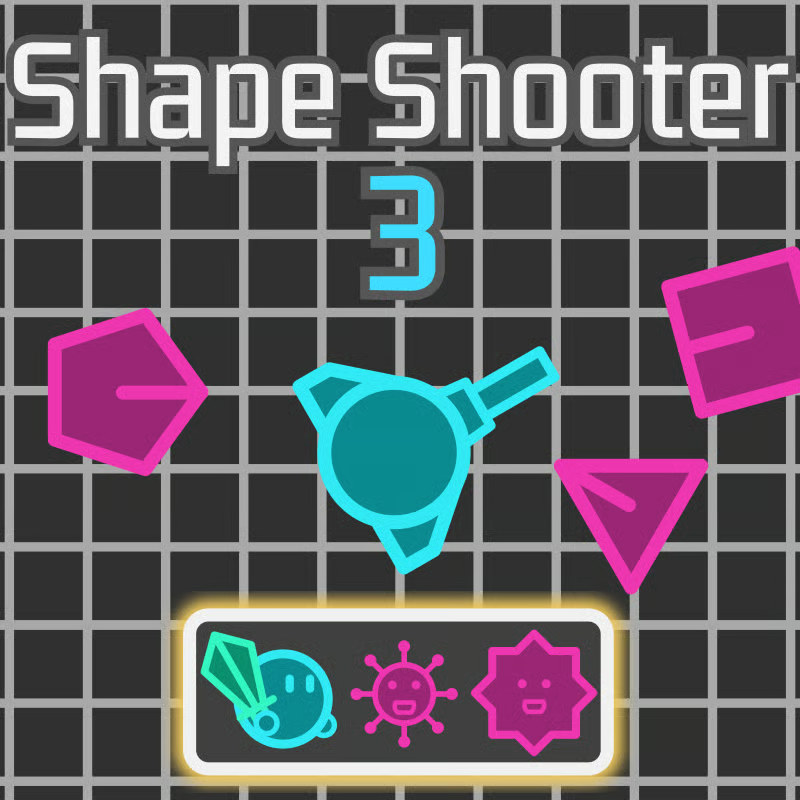
Shape Shooter 3
Money Factory
Mini-Caps: Arena
Chibi Doll Dress Up & Coloring
Stickman Project
Road Master 3D
Wedding Coloring Dress Up Game
Burger Boss
Merge Mine: Idle Clicker
Find The Pets
Scavenger Hunt - Multiplayer
Genius Car 2

Offroad Climb 4x4
Roglide: Slide & Match Blocks
Dogs vs Aliens
Project Prismatic
Obby: Boxer
Cougar Simulator: Big Cats
Tap Reveal
Alcatraz Prison Escape Plan
Noob: Zombie Prison Escape
Feed Me Monsters!
Glitch
Castle Keeper
Don't Get the Job
Cubic Frontier: Zombie Robby
Blitz Tanks
Idle Zoo

Drift Arena
Evil Neighbor
Kick Loser
Sky Car Drift
Miner's Odyssey
Survivor: Space Battle
PlayBlox.io
Color Screw: Unscrew & Match
Scoring Champion
Lunar Knight
DayCare Tycoon
Nuts and Bolts Brainteasers
Rodha
Deep Miners Idle 2

Unique Flavors
Forest Dump

RealDrive
Draw Quiz
Draw Quiz — A Fun Drawing Puzzle Game Where You Sketch, Guess, and Think Like a Smart Painter
Draw Quiz is a casual drawing puzzle game that blends quick creativity with brain-teasing guessing. You’re given a clue or description, you draw the object as best you can, and then you figure out what the game is asking for—sometimes through your own sketch, sometimes through clever interpretation of the prompt. It’s the perfect mix of doodle fun and puzzle solving: relaxing enough for a short break, but challenging enough to make you feel smart when you crack a tricky level. If you enjoy sketch-and-guess games, word-style riddles, and creative mobile-like puzzles you can play online, Draw Quiz turns simple lines into satisfying “aha!” moments.
What makes Draw Quiz addictive is the progression. Early levels feel easy and playful, but later puzzles push you to think differently: draw only what matters, spot keywords in the clue, and avoid overcomplicating your sketch. The game rewards players who can simplify shapes, interpret descriptions, and stay flexible when a clue has multiple meanings. Whether you’re playing to relax, train your brain, or test how far your creativity can go, Draw Quiz offers a smooth learning curve with plenty of surprises.
Gameplay: How Draw Quiz Works
Draw Quiz is built around a simple loop: read the clue → draw the object → guess the answer → advance. Each level gives you a description or prompt. Your job is to create a drawing that fits the clue, then identify the item correctly. As you progress, prompts become less literal, objects become more specific, and clues can include playful misdirection.
What you’ll do in each level:
-
Read a description or clue that hints at an object, idea, or item.
-
Draw the object using basic lines and shapes—no art degree required.
-
Guess the answer by interpreting the clue and your drawing’s key features.
-
Solve increasingly challenging puzzles as the game introduces harder words, more abstract concepts, and trickier prompts.
-
Build pattern recognition by learning common object categories and clue styles.
Because Draw Quiz is a casual puzzle game, it’s approachable for all skill levels. The fun isn’t in perfect artwork—it’s in solving the prompt efficiently. Many puzzles can be solved with a few clear lines, while over-drawing often makes the answer harder to see.
Tips and Tricks to Solve More Draw Quiz Levels
Want to guess more items, clear levels faster, and avoid getting stuck on tricky prompts? These practical tips help you become a smarter, more consistent “painter.”
1) Draw the simplest recognizable silhouette
In drawing guessing games, the outline matters more than details. Focus on a shape people instantly recognize: a cup with a handle, a fish with a tail, a key with teeth. If the silhouette reads clearly, you’re already close to the solution.
2) Identify the “keyword” in the clue
Many prompts hide the answer in a single key word—material, function, location, or category. If the clue mentions “fly,” think of wings; if it mentions “kitchen,” think of utensils; if it mentions “write,” think pen, pencil, or paper. Let the clue guide your first sketch.
3) Use two features that separate similar objects
Some objects look alike: apple vs. tomato, cup vs. mug, clock vs. watch. Add one or two distinguishing features—stem, handle, strap, numbers—then stop. Too many details can distract you from the core identity.
4) If you’re stuck, draw the action instead of the thing
For tricky clues, draw the object’s purpose: a broom sweeping, scissors cutting, a camera flashing. Function-based drawings often solve puzzles faster than trying to guess a perfect shape.
5) Don’t overthink abstract prompts
When the game gets harder, clues may feel abstract. In those cases, the most common interpretation is often correct. If the clue suggests “cold,” try snowflake or ice. If it suggests “music,” try a note. Start simple and adjust only if the game pushes you away.
6) Treat wrong guesses as information
A wrong guess narrows the space. If your sketch suggests “cat” but it’s wrong, you’re probably in the right category—maybe “tiger,” “lion,” or “dog.” Keep the silhouette and tweak a key feature.
7) Practice “icon drawing” habits
Think like a logo designer: clear, minimal, readable. Icon-style drawing is the secret weapon in Draw Quiz because it matches how puzzle games interpret sketches.
8) Play in short bursts to stay fresh
Because this is a casual brain puzzle, your best performance often comes in small sessions. A few levels at a time keeps you creative and reduces frustration.
Player Intent Covered: Why People Search for Draw Quiz
Draw Quiz fits multiple common reasons players want this type of game:
-
A fun drawing game without pressure: doodle-friendly, no need to be an artist.
-
A guessing puzzle with creativity: mix of drawing and brain-teaser logic.
-
A casual game for quick breaks: short levels and instant restarts.
-
A family-friendly puzzle game: lighthearted prompts and accessible gameplay.
-
A brain training style challenge: pattern recognition, vocabulary, and clue interpretation.
-
A relaxing sketch game: satisfying, low-stress progression.
-
A “smart painter” skill test: clear proof of improvement as prompts get harder.
If you enjoy games where the solution is often “obvious in hindsight,” Draw Quiz is full of those moments. The best part is that progress feels personal: you start drawing messy, then gradually learn how to sketch smarter, not harder.
FAQ
Do I need to be good at drawing to play Draw Quiz?
No. The game rewards clear shapes and smart clue interpretation, not artistic skill. Simple stick-figure-style sketches can solve many levels.
Why am I stuck even when my drawing looks right?
Sometimes the clue expects a specific object variant. Try adding one distinguishing feature (like a handle, strap, or button) or simplifying your sketch to focus on the main silhouette.
What’s the best way to guess faster?
Read the clue for a keyword, then draw a recognizable outline with one or two defining details. Avoid over-drawing and keep your sketch icon-like.
Do the puzzles get harder over time?
Yes. Prompts become more specific or more abstract as you progress, which is why learning to simplify and recognize clue patterns helps a lot.
Is Draw Quiz good for short sessions?
Absolutely. Levels are quick, and the gameplay loop makes it easy to play a few puzzles anytime.
🎮How to Play
Controls
Use the left mouse button to interact with in-game UI.