
PlayBlox.io
Cubic Frontier: Zombie Robby
Mega Parkour: Obby Escape Run
Obby Challenge: Prison Run

Obby Parkour Race: Multiplayer

Obby: Ragdoll Boxing
Obby Yard Sale

Obby World: Squid Escape

Fortzone Battle Royale

Race Clicker: Tap Tap Game
Bank Heist
Vehicle Masters

Crazy Plane Landing
House of Celestina
Sharkosaurus Rampage
Obby: Pull a Sword

Cricket Superstar League

Sunset Bike Racing
Fisherman Life
Shape Shooter 3
Money Factory

Mini-Caps: Arena

Chibi Doll Dress Up & Coloring
Stickman Project

Idle Zoo
Don't Get the Job

Sniper Master
Fly for Fly
Ad Fundum
Arcade Empire

Popcorn Chef 2
Anna's Story: Dress Up DIY

Find The Pets

Sneaker Art

Rodha
Space Rescue
Endurance: A Top-Down Sci-Fi Shooter

Superstar College Girls Makeover
Bounce Heroes

Evil Neighbor
Alcatraz Prison Escape Plan
Scoring Champion

RealDrive
Color Screw: Unscrew & Match

Noob: Zombie Prison Escape

Hill Racing
Obby Sprunki: Pet World
Sniper Attack 3D: Shooting War
Roglide: Slide & Match Blocks

Uncle Hit: Punch the Dummy
Diver Hero
Loot Challenge

Kings Clash
Coloring by Numbers: Pixel House

Digital Circus: Obby
RPG Idle Clicker
Sky Car Drift

Crafters Inc: Tycoon Empire
Hacking Hero: Hacker Clicker

Just Park It 12
Botanica: Greenhouse of Wishes
Idle Sea Park
Fireman 2024

Make Up Hole
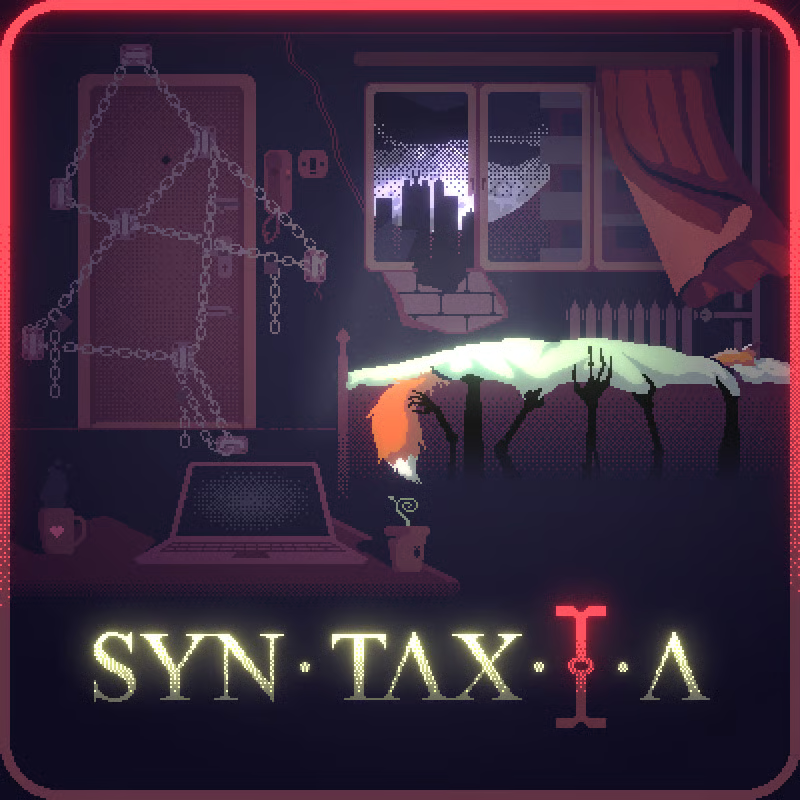
SYNTAXIA
SYNTAXIA — WRITE REALITY, SOLVE MIND-BENDING PUZZLES, AND ESCAPE THE SENSORIA KOMPLEX
SYNTAXIA is a narrative-driven adventure story game built around a rare kind of power fantasy: you don’t swing a sword or fire a gun—you write, and the world obeys. You awaken inside a decaying facility, disoriented and alone, surrounded by corridors that feel abandoned yet strangely alive. A nearby laptop flickers to life, and with it comes a terrifyingly beautiful ability: whatever you type becomes reality. A word can open a path, a sentence can change an obstacle, and a carefully chosen phrase can rewrite the rules of the room you’re trapped in.
As you explore the enigmatic Sensoria Komplex, SYNTAXIA blends atmospheric storytelling with puzzle-solving that feels personal. The game doesn’t simply ask you to find keys—it asks you to think like an author under pressure. You’ll test ideas, manipulate environments, and uncover secrets hidden behind locked doors, broken systems, and cryptic clues. The deeper you go, the more SYNTAXIA becomes a psychological escape room: your choices shape the scene, and the wrong wording can create new problems. If you enjoy mystery adventure games, interactive story puzzles, and experiences where creativity is a real mechanic, SYNTAXIA is a compelling journey into control, consequence, and escape.
Gameplay: How SYNTAXIA Works
SYNTAXIA’s gameplay centers on exploration, story discovery, and a unique “writing-as-magic” system that changes the environment.
-
Explore a decaying complex: The Sensoria Komplex is a maze of eerie rooms, broken machinery, locked passages, and unsettling details that hint at what happened here.
-
Use the laptop to alter reality: Your key tool is language. By writing commands, descriptions, or changes, you can affect objects, doors, hazards, and puzzle elements—turning the act of typing into your primary interaction.
-
Solve puzzles through wording and logic: Many obstacles aren’t solved by brute force but by choosing the right idea and expressing it correctly. You’ll combine observation with experimentation to discover what the world will accept.
-
Uncover secrets and hidden lore: Notes, environmental clues, and strange anomalies reveal the Komplex’s history and the true nature of your power.
-
Search for a way out: Your goal is escape, but the path forward is rarely straightforward. SYNTAXIA rewards players who question everything: who built this place, why it’s collapsing, and why your words hold power here.
Because the mechanic is built on writing, the game naturally encourages multiple approaches. One player might solve a problem with a direct command, another with a clever workaround. That flexibility makes SYNTAXIA feel like a living story—one you’re actively composing.
Tips & Strategies: Write Smarter, Escape Faster
The difference between getting stuck and making progress in SYNTAXIA often comes down to how you think about language and constraints. These tips will help you turn creativity into consistent solutions.
-
Start simple before you get poetic
When you face a locked door or a blocked hallway, begin with straightforward, practical wording. Simple changes are easier to control and less likely to create unintended consequences. -
Observe the room like a puzzle designer
Before typing anything, scan for what’s “interactive” in the environment: power panels, vents, fragile objects, warning signs, unusual textures, or repeated symbols. Your best clue is often visual. -
Treat every word like a parameter
If a solution partially works, adjust one detail rather than rewriting everything. Small edits help you learn the rules of what the Komplex allows—whether it responds better to objects, states, or actions. -
Use constraints as hints, not punishments
If the game rejects an idea or your attempt doesn’t behave as expected, that’s information. It tells you what the system doesn’t accept, narrowing the space of valid solutions. -
Build solutions in steps
Complex problems often require a chain: stabilize a hazard, create a tool, open a route, then lock the change in place. Step-by-step writing is safer than trying to solve everything in one sentence. -
Keep a mental list of reliable verbs and states
Most writing-based puzzles have patterns. Once you discover wording that consistently affects doors, power, light, movement, or material properties, reuse those patterns to solve later challenges. -
Think about consequences before committing
Your power can reshape reality, but reality reshaped can reshape you back. If you create a shortcut, ask what it might break: visibility, stability, enemy movement, or the narrative path.
What Players Want (User Intent Coverage)
SYNTAXIA fits several popular player intents, especially for fans of story-rich puzzle adventures:
-
A mystery adventure game with an immersive setting: Explore an eerie complex and piece together what happened through environmental storytelling.
-
An interactive story game where choices matter: Your words shape the world, making the story feel personal and reactive.
-
A puzzle game that rewards creativity: Instead of one fixed answer, many situations encourage experimentation and clever solutions.
-
An escape-room style experience: Locked doors, hidden routes, and layered puzzles with a clear objective: get out.
-
A unique writing mechanic game: Typing becomes your primary tool, blending language, logic, and world manipulation.
-
Atmospheric exploration with secrets: Discover lore, hidden rooms, and story fragments that change how you understand the Komplex.
FAQ
Q1: What kind of game is SYNTAXIA?
SYNTAXIA is a narrative adventure puzzle game set in the Sensoria Komplex, where a laptop grants you the power to make written words become reality as you explore, solve puzzles, and search for escape.
Q2: How does the writing mechanic work?
You type changes using the laptop, and the environment responds. The game challenges you to find wording that the world accepts to alter objects, states, and pathways.
Q3: Is SYNTAXIA more story-focused or puzzle-focused?
It’s both. The story drives the mystery of the Komplex, while puzzles are the main way you progress, often requiring creative writing-based solutions.
Q4: What should I do if I’m stuck on a puzzle?
Simplify your wording, examine the room for overlooked interactive elements, and test small changes. Treat failed attempts as clues about system limits.
Q5: Are there multiple ways to solve puzzles?
Often, yes. Because the mechanic is flexible, you can approach obstacles with different writing strategies and step-by-step solutions.
Q6: Is this game good for players who like escape rooms?
Absolutely. The setting, locked pathways, and layered puzzle structure feel like a digital escape room with a strong narrative core.
🎮How to Play
Controls
- AD = move
- E = interact with an object
- Space = open / close laptop
- Mouse = laptop control